In March 2026, a member of Maryland's congressional delegation called Annapolis Mayor Jared Littmann with news he later described in three words: "Are you sitting down?" A $35 million federal grant, the last piece needed to fund the city's $87.8 million City Dock Resiliency Project, had come through. Weeks later, inside the State House less than a mile from that same waterfront, the General Assembly passed its own flood protection measure: House Bill 200, which gives Maryland sellers until July 1, 2027 before they're legally required to hand buyers a state flood risk disclosure form and, where one exists, a FEMA elevation certificate.
On paper, that compliance date is still nearly a year off. Talk to anyone closing a deal in Eastport, Murray Hill, or along the Severn this summer, and a different picture shows up. The paperwork the law will eventually require is already the paperwork buyers' attorneys are asking for. The deadline that actually shapes offers on Annapolis waterfront property has already arrived, just not the one printed in the statute.
The Law Says 2027. Your Buyer's Attorney Says Now.
Right now, Maryland's actual legal bar for sellers is narrow. Under current rules, a seller only has to disclose whether water stands on the property for more than 24 hours after heavy rain and whether the home sits in a designated flood zone. That's it. HB 200 will raise that bar substantially once it takes effect, requiring a completed disclosure form plus an elevation certificate, if one exists, before a contract is signed.
The gap between those two standards, what the law demands today versus what it will demand in 2027, sounds like it buys sellers a year of breathing room. In practice, it doesn't, because the market closed that gap on its own. Attorneys representing waterfront buyers in Annapolis have been building elevation and flood-history requests into contract riders for years, well ahead of any statute forcing them to. The law isn't creating new expectations. It's writing down, in state code, what a competent transaction has already required.
What a Waterfront Buyer's Attorney Actually Asks For
If you're preparing to list a home on the water in Annapolis, the practical checklist looks less like a legal form and more like a stack of maintenance records:
- A current bulkhead or seawall inspection report
- Flood zone designation and an up-to-date flood insurance quote
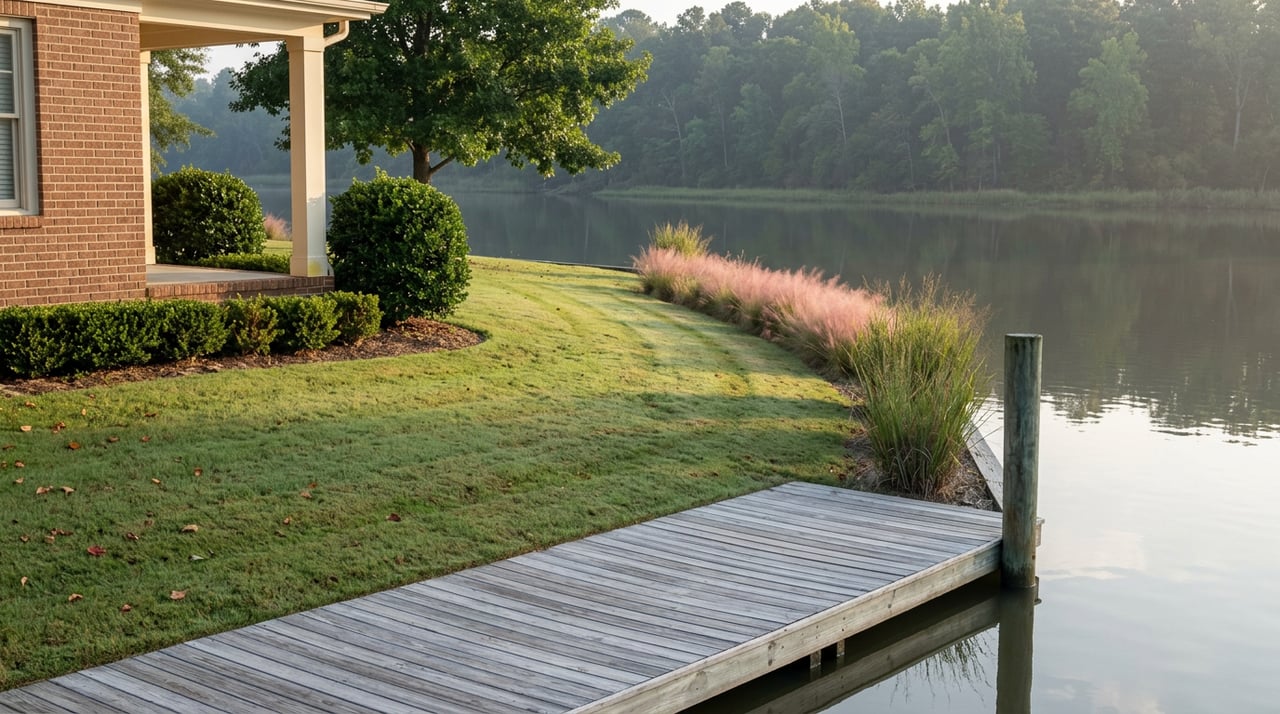
- Pier permit documentation, including dock specifications and water depth at mean low water
- Records showing compliance with Anne Arundel County's Critical Area rules
- Any past insurance claims or repair history tied to flooding or moisture
None of this shows up on a listing sheet. It surfaces during due diligence, when a buyer's attorney starts asking who actually owns the bulkhead, where the mean high and mean low water lines fall, and whether a shared pier agreement limits what the next owner is allowed to build. Sellers who wait until closer to 2027 to assemble this file aren't getting ahead of the law. They're getting behind a due diligence process that's already standard practice on the water.
Why a $440,000 City Dock Can Explain Your Bulkhead Permit
Waterfront property in Annapolis carries a second layer of friction that has nothing to do with insurance and everything to do with who's allowed to touch the shoreline. Work on a dock, pier, or bulkhead in tidal water typically needs sign-off at three separate levels: Anne Arundel County, the Maryland Department of the Environment, and the U.S. Army Corps of Engineers. Whether a project counts as an in-kind repair or a new, expanded structure determines which of those approvals apply, and any dredging adds its own testing and seasonal timing restrictions to protect aquatic life. Anne Arundel County's Critical Area rules stack on top of that, governing vegetation buffers and impervious surface near the water.
The scale of that process shows up even in projects the city itself controls. Annapolis recently built an ADA-accessible floating dock in Eastport for $440,000, funded through a $350,000 grant from Maryland's Department of Natural Resources State Waterway Improvement program, $65,000 in city bonds, and $25,000 in capital reserves. If a single publicly funded dock needs that many layers of money and approval to get built, a private bulkhead replacement isn't going to move faster.
In testimony submitted to the General Assembly during the HB 200 hearings, the Natural Resources Defense Council cited research showing that owners of previously flooded homes are projected to pay an average of $65,000 over the life of a 30-year mortgage in flood-related costs, a figure that climbs to $147,000 once climate projections are factored in.
That's the cost the disclosure law is trying to make visible to buyers before they sign. It's also, whether the statute has technically taken effect or not, already the number waterfront buyers in Annapolis are pricing into their offers.
The City Dock Project Is the Same Machine, Just Bigger
The $87.8 million City Dock Resiliency Project, funded through that $35 million FEMA grant along with Anne Arundel County, the state, city bonds, and a concession agreement tied to a municipal parking garage, broke ground in November 2025. The old Harbormaster building came down that December, with utility and electrical work continuing into 2026. City officials frame the project as a stabilizing force, designed to cut back on the chronic flooding that hits homes and businesses near downtown, and something buyers can point to as a sign the city is investing in resilience.
That framing is fair as far as it goes. But the more useful lesson for a seller isn't about buyer confidence. It's about timeline. A project with the city's own bonding authority, a federal grant, and multiple layers of government still took years to fund and will take years more to finish. A private bulkhead repair runs through fewer dollars but the same three-agency approval chain. If you're planning shoreline work before listing, expect the calendar, not the budget, to be your constraint.
What This Actually Costs a Seller Who Waits
None of this needs to derail a listing timeline if you start early. The practical version of "get ahead of it" looks like this:
- Order a bulkhead or seawall inspection before you list, not after an offer comes in
- Confirm your flood zone designation and get a current insurance quote so buyers aren't guessing
- Pull your pier permit records and know your dock's depth at mean low water
- Document any Critical Area compliance work you've already done
- Keep receipts for repairs tied to moisture, flooding, or foundation work, even minor ones
It's also worth building tax friction into your expectations. Maryland's state and Anne Arundel County transfer taxes, combined with recordation tax, typically run in the range of 1.5% of the sale price, split between buyer and seller. On a home selling in the mid-$600,000s, that's several thousand dollars in closing costs before any waterfront-specific inspection or documentation expense is even factored in.
As for pricing, local market trackers reported Annapolis median sale prices in 2026 landing anywhere from roughly $609,000 to $660,000, depending on the month and the mix of closings, with waterfront and water-privileged homes in Eastport, Hillsmere Shores, Cape St. Claire, Harness Creek, Fishing Creek Farm, and Wardour pulling toward the upper end. Well-documented listings in that range have generally moved in about a month once priced correctly. The ones that stall longer are usually stalling on missing paperwork, not on price.
A Few Questions Worth Answering Before You List
Do I have to hand buyers a flood disclosure form right now, in 2026? Not yet under state law. Current Maryland rules only require disclosing whether water stands on the property more than 24 hours after heavy rain and whether it sits in a flood zone. The more detailed form and elevation certificate requirement doesn't become mandatory until July 1, 2027.
What is Critical Area review, and does it affect my listing? Anne Arundel County's Critical Area rules govern vegetation buffers and impervious surface near tidal water, and they apply on top of any dock, pier, or bulkhead permitting required by the county, the state, and the Army Corps of Engineers.
Will the City Dock project make waterfront homes near downtown more valuable? It's designed to reduce chronic flooding downtown, and city officials see it as a long-term confidence builder for buyers. It won't be finished for years, so treat it as a factor worth mentioning, not something that changes your pricing strategy this season.
Selling a waterfront or historic Annapolis property means selling into a due diligence process that's already stricter than the law requires. The sellers who move fastest this year are the ones who treat 2027 as a formality and start gathering their documentation now.
If you're weighing a sale in Eastport, along the Severn, or anywhere else on Annapolis water, Rosewood Home Group can walk through what your specific property will need before it hits the market. Request a Complimentary Home Valuation to start that conversation.